On a hair-raising road trip through the sordid history of American Imperialism, Hunter is chased and tormented by his political enemies, the Empire Bats…

In the nineteenth century, the North American Empire (as it is known in Latin America) proclaimed a “manifest destiny” to control its own hemisphere and in the century that followed sought to increase its hegemony over all of the Americas.
This film concentrates on a small handful of these interventions from the 1950’s through to the 1990’s when democratically elected governments in the region were overthrown and replaced by U.S. friendly dictatorships at a devastating cost to the populations and the future direction of their countries. All of these outcomes were aided and abetted, often enthusiastically, by a largely uncritical media.
One commentator who refused to turn a blind eye was the author, journalist and “freewheeling iconoclast,” Hunter S. Thompson, whose derision of the “buffoons and liars” promoting U.S. foreign policy and the “flag-sucking” media that supports them sums up the film’s central themes.
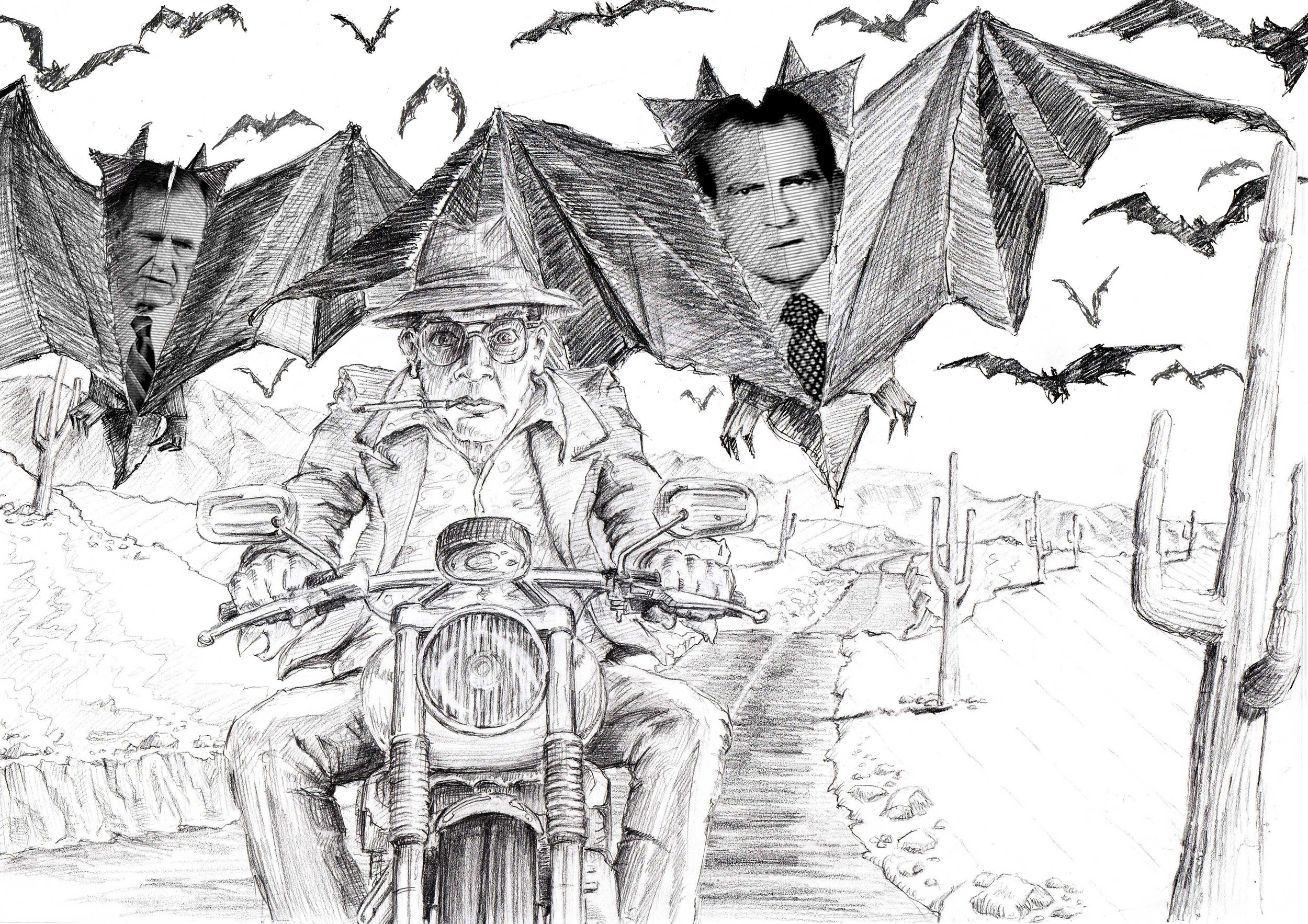
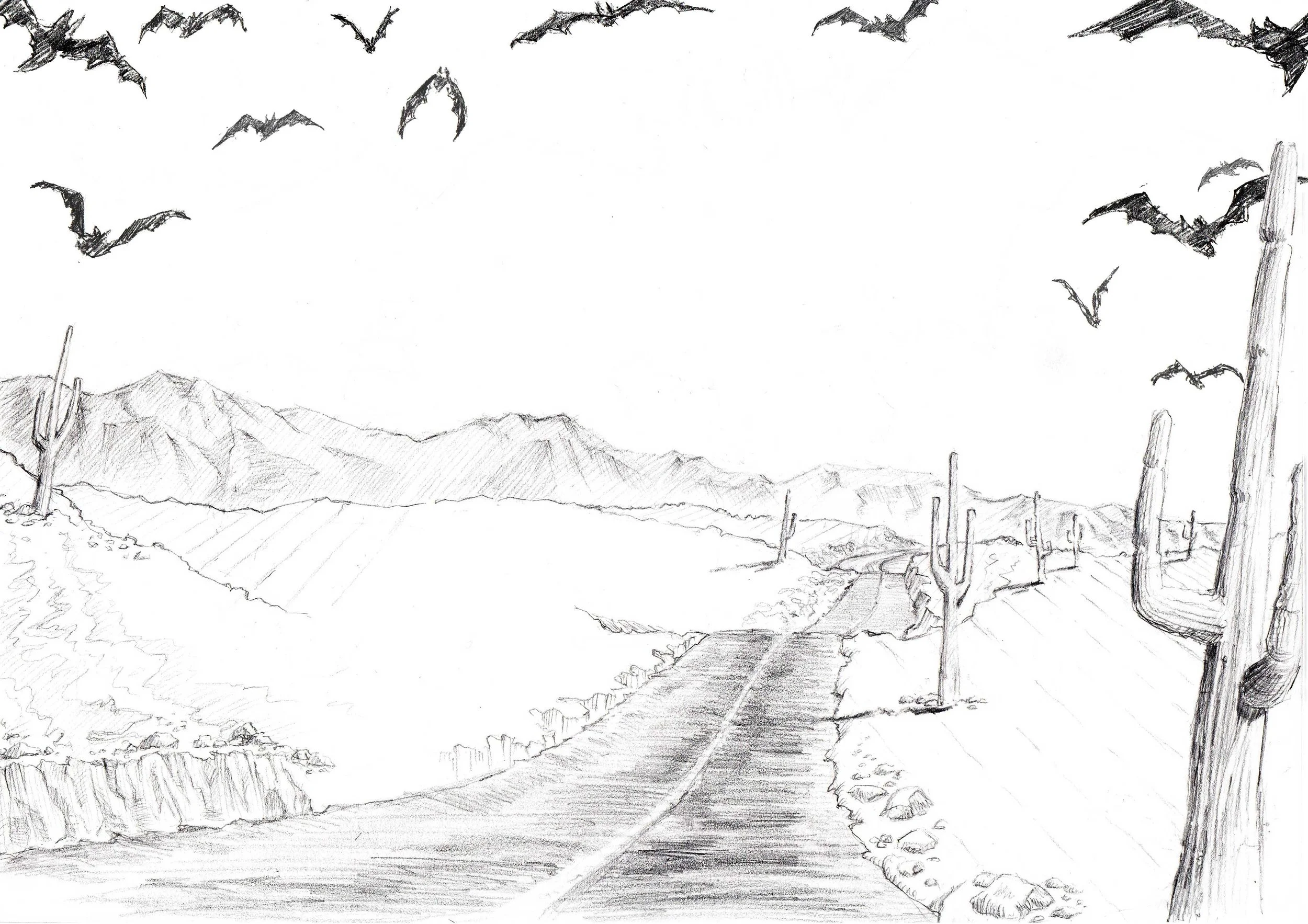
In animated flesh and blood form, Hunter is the central character and narrator. His voice comes from two of his last radio interviews and the film begins with his statement that the media coverage leading up to the illegal invasion of Iraq in 2003 was “shameful.” This is the launch pad that sends the viewer on a white-knuckle ride through the desert on Hunter’s motorbike and back to some of the disastrous conquests in Latin America that preceded those in the Middle East.
The giant paper bats that chase him are the architects of these horrors – Presidents, Secretaries of State, Intelligence Agency directors and media barons – their video faces chanting the slogans of “Freedom and Democracy,” their wings printed with the secret methods of achieving it: “Black Ops, Psych War and Propaganda.”
Made of paper, the bats are a symbolic nod to Hunter’s trade of journalism, which he believed had been corrupted by less scrupulous colleagues, and more than hint at their paper-thin sincerity.

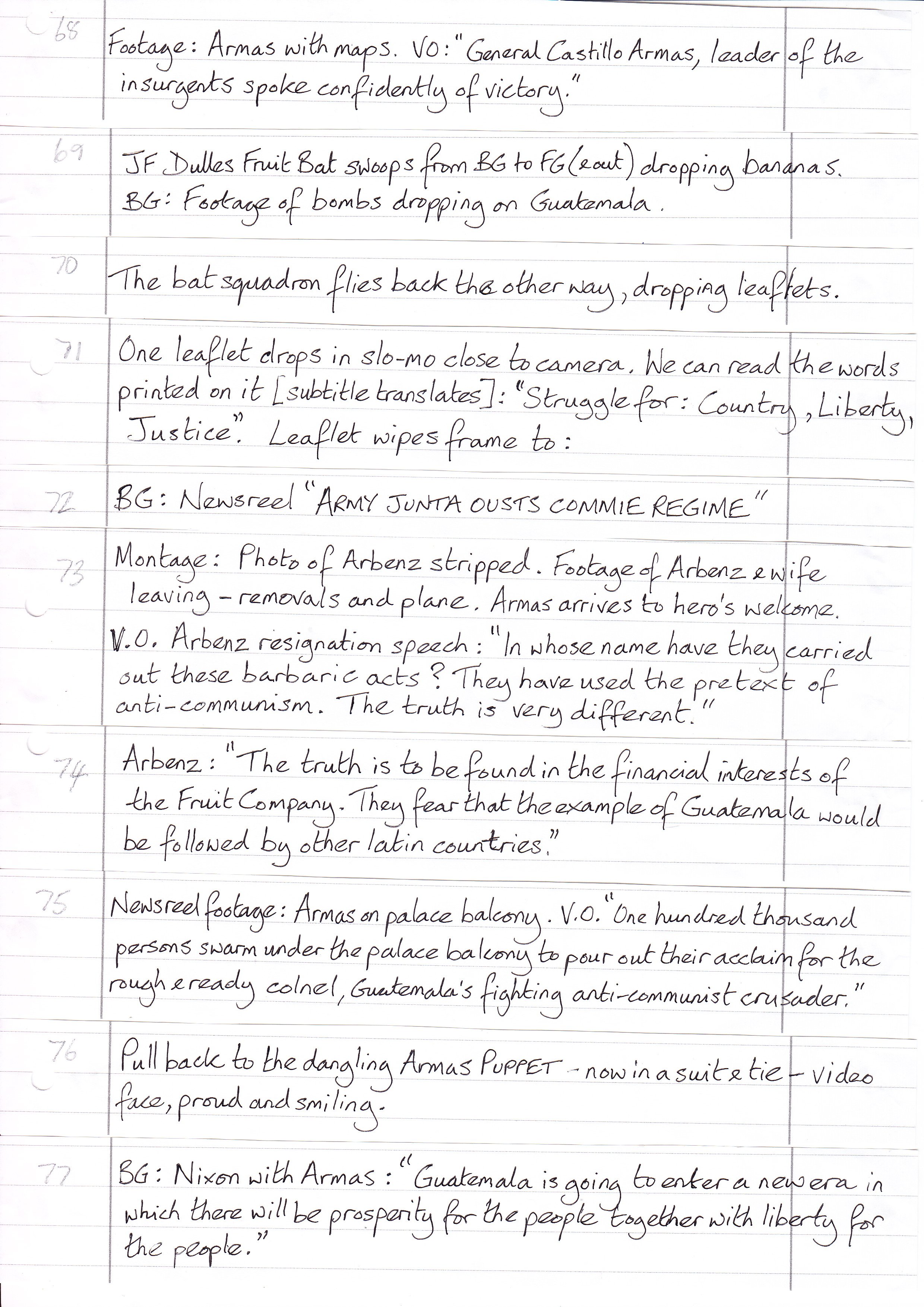
“BORING”
Conventional documentaries that have tackled the same geo-political events in Guatemala, Chile, Nicaragua and Panama have covered the issues in great depth but with limited reach. Meanwhile, the same brand of foreign policy that rocked those countries continues to be rolled out across the globe under the same “democratic” pretexts.
Guided by the principle that the most successful documentary is one that can engage a viewer who has no prior interest in the subject matter, the animated documentary, Empire Bats, is designed to appeal to the widest audience possible in a compact, memorable and darkly humorous way.
With the arresting qualities of stop-motion animation and human pixilation, combined with archive material and Hunter S. Thompson’s singularly caustic take on the personalities and ideologies driving these events, this film is a wake up call to anyone who thinks that politics is “boring.”


In the last paragraph of his last book, Kingdom of Fear, Hunter S. Thompson describes himself as:
“a teenage girl trapped in the body of a sixty-five year old career criminal who has already died sixteen times.”
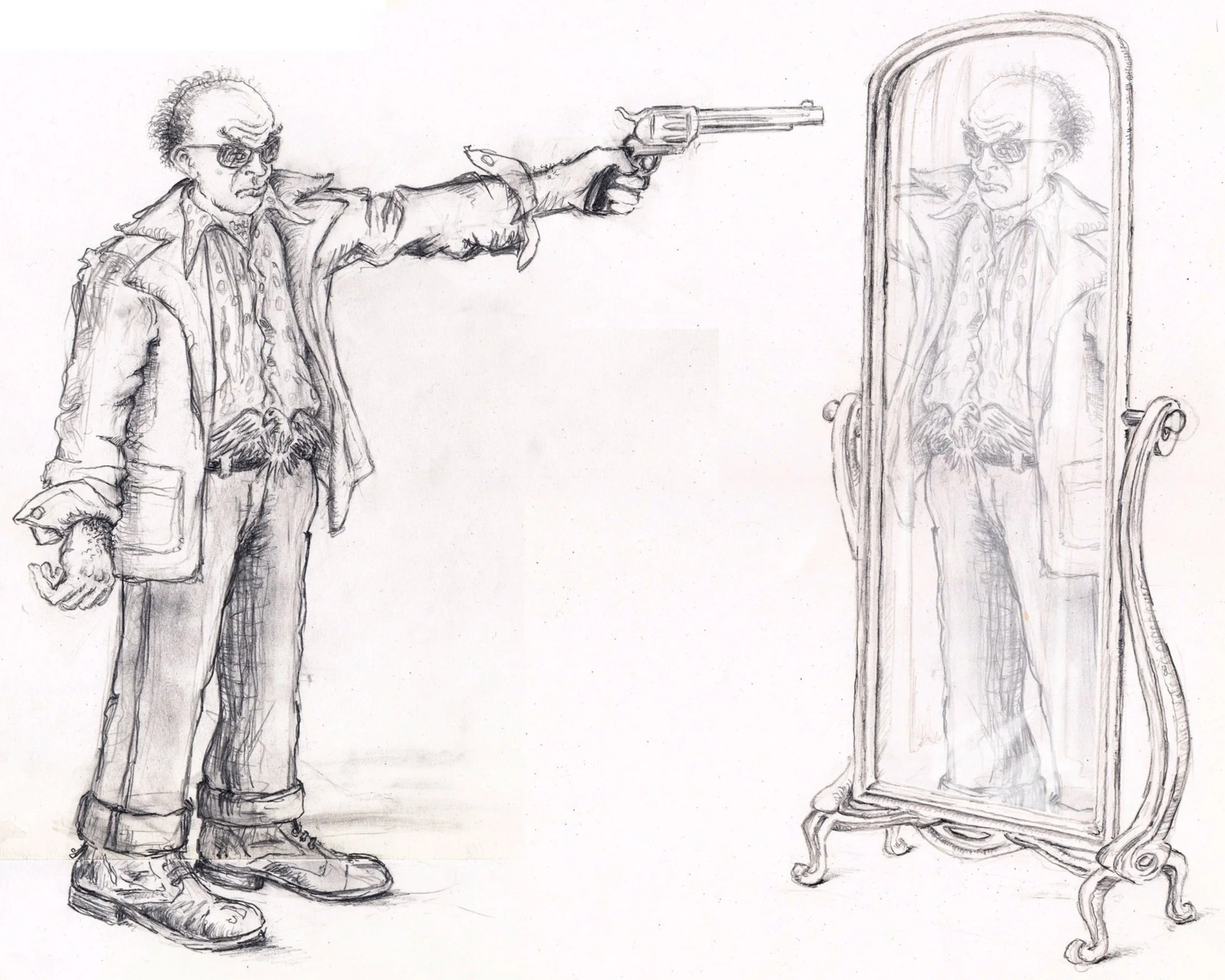
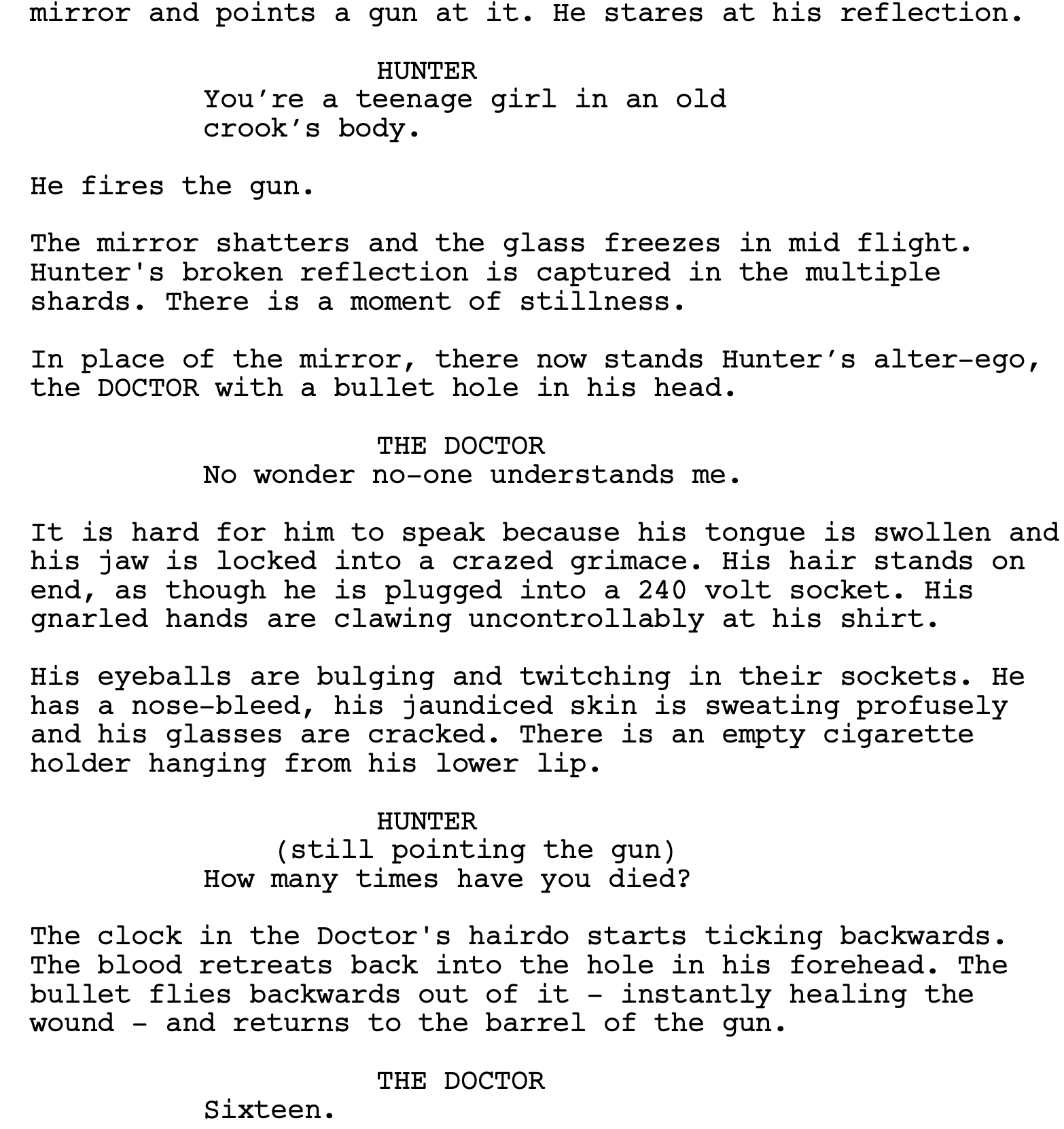
In the penultimate scene of Empire Bats, Hunter the maverick journalist comes face to face with his alter ego, the self-destructive action junkie, and the accumulated cost of it burns, poisons, drowns, electrocutes and blows up his body in a rapid reverse-action recap of his life.

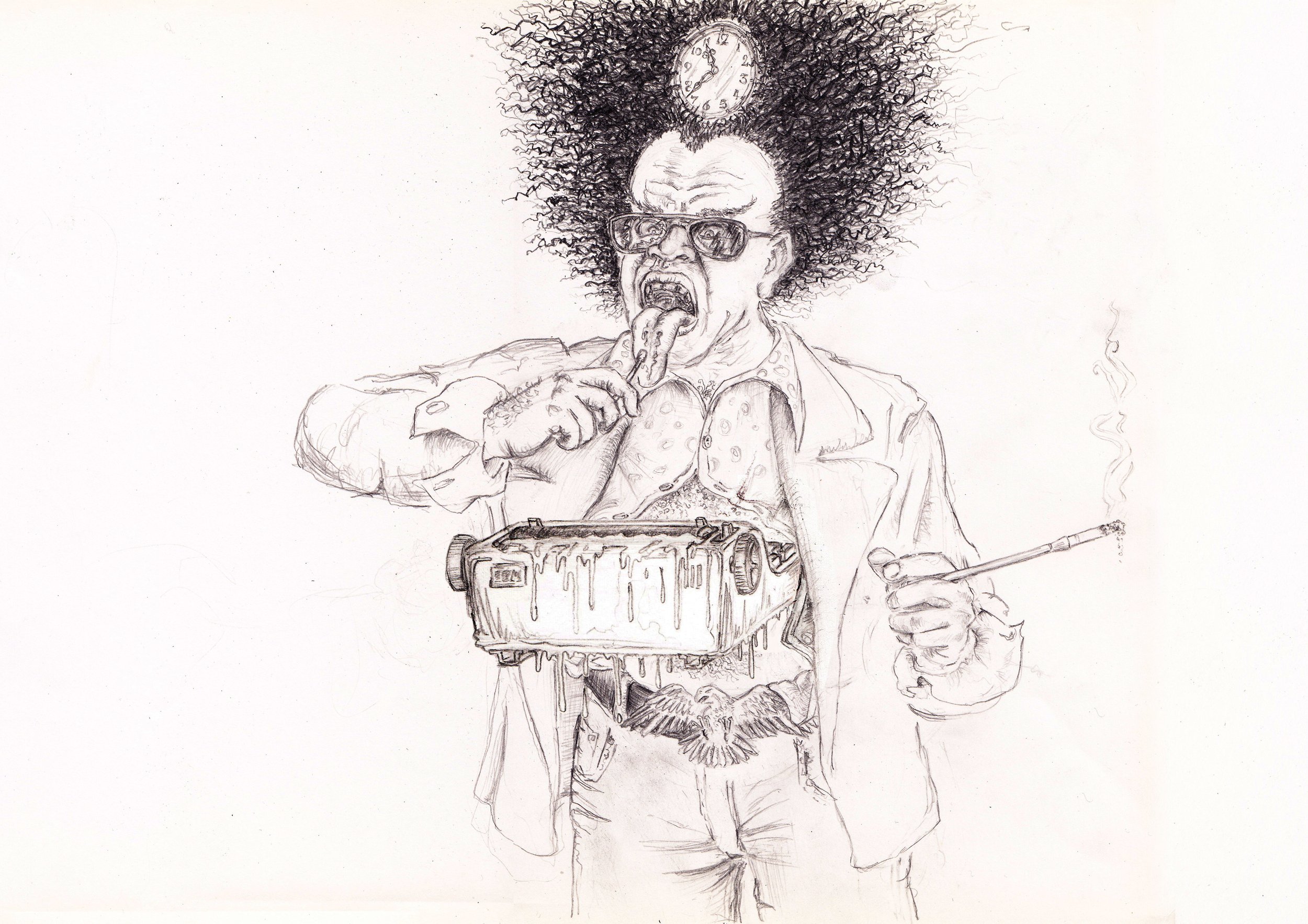
His wiry nest of hair sticks up at all angles in SHOCK. There is a CLOCK embedded in it. His face is JAUNDICED and SOOTY. His glasses are CRACKED, his nose is BLEEDING and his shirt is CHARRED. There is a BULLET HOLE in his forehead and built into his chest is an electric TYPEWRITER.

A 67 year-old gonzo-man with male-pattern baldness and a gun. He wears the same clothes as the Doctor but they are clean and un-tattered. If it weren’t for all the extra hair and physical damage, The Doctor would be his mirror image.